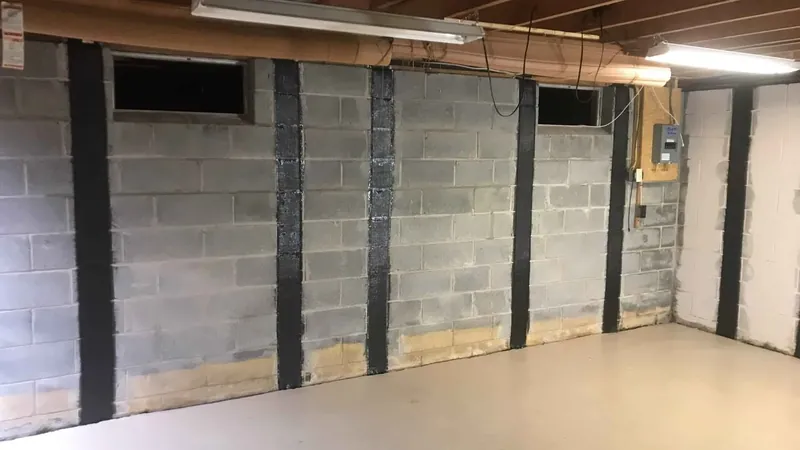
What Homeowners Describe
We see a white, powdery stain on the basement wall, often in a band or patch that follows the block joints. It brushes off easily and comes back. The wall feels cool and slightly damp. In some spots the paint has lifted behind the powder, and the mortar looks grainy. The powder follows the joints, which shows where water moves through the wall. The powder is thickest where the wall stays wettest.
What Is Usually Happening
Efflorescence is salt carried by water moving through the wall and left behind when the water evaporates. The powder itself is harmless, but the water that brought it is not. It shows that moisture is passing through the wall from the outside or from the soil. Where there is powder, there is a path. The path through the wall stays open.
What It Does to the House
The same water that leaves salt also damages the wall. Paint blisters, mortar softens, and the surface stays damp. The stain returns after every wet period because the path through the wall has not closed. The wall never fully dries. Sealer on the inside traps the water.
What It Means for the People Inside
A wall that stays damp can raise humidity in the basement, and damp air may support mold growth. The powder also shows water is moving where it should not. Damp walls can keep the basement air heavy.
The Next Step That Saves Money
Have the wall checked for the water path, then correct drainage and waterproof the exterior face rather than sealing the inside only. Sealing the inside only pushes the water to a new path in the wall.
EcoSpect works across the Finger Lakes and Central New York, including Onondaga County, Ontario County, Schuyler County, Seneca County, Steuben County. If you are outside these counties, call (855) DRY-BSMT and we will confirm coverage.
What People Search Next
- efflorescence basement
- white powder wall
- salt stain block wall
- efflorescence cause
- basement wall damp
- water through wall
- efflorescence removal