What Homeowners Describe
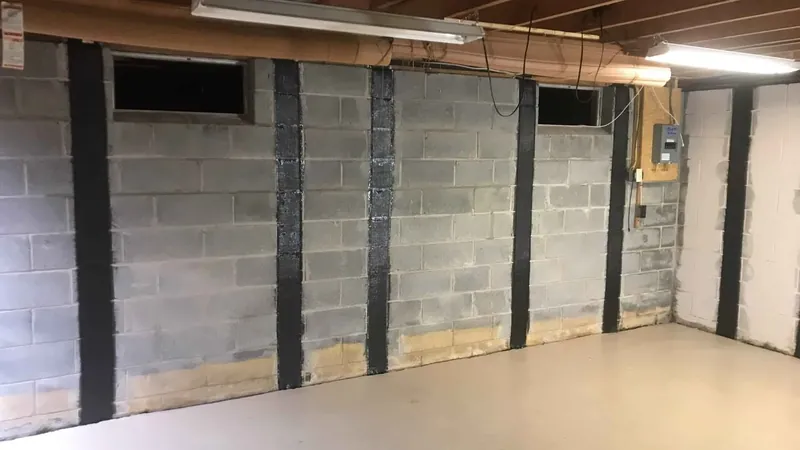
We see one course of block offset from the one below it, with the mortar joint stepped or opened. The shift is small at the ends and wider in the middle, and a straight edge shows the wall face out of line. Cracks run along the joint rather than across the block. The step is easy to feel with a hand, even where it is hard to see. The joint feels rough where the courses have slipped.
What Is Usually Happening
A block wall resists sideways force through its mortar joints and its weight. When the joint shears, one course slides against another. That happens when soil pressure, settlement, or movement pushes the wall in a direction it was not built to resist. The joint is the weakest line, so it opens first. The wall loses its bond line by line.
What It Does to the House
A wall that is shearing is losing its ability to act as one piece. The shift grows under the same load, and the wall above the joint leans or steps. Patching the joint does not restore the bond. The wall above the step loses its bearing.
What It Means for the People Inside
A wall that slides along a joint can lose stability, which is a structural safety concern. Open joints also let water into the wall and weaken the mortar further. Water in the joint can freeze and push the courses apart.
The Next Step That Saves Money
Have the wall checked for the direction of movement and the cause, then repair or reinforce the wall so the courses act together again. Do this before the shifted course takes the wall with it.
EcoSpect works across the Finger Lakes and Central New York, including Jefferson County, Monroe County, Onondaga County, Ontario County, Schuyler County. If you are outside these counties, call (855) DRY-BSMT and we will confirm coverage.
What People Search Next
- block wall shearing
- block course offset
- mortar joint slipping
- block wall shifting
- step crack block
- block wall repair
- wall shearing